
On this page
I saw a friend this weekend, and we had a chance to go pretty deep. We hadn’t caught up properly in a long time.
His life had been turned upside down and then right-side up again over the last seven years. The story he shared was part tragedy, part inspiration. He had been in some dark places, climbed out and arrived safely on the other side. He took responsibility for all of it, and as I listened to the story, I was amazed by the amount of work he’d put in -- and what he’d overcome.
He told me he felt better than he ever had. And then he said something I won’t soon forget:
“I’m not afraid of my life anymore.”
Not something you hear every day.
And it made me think: how many of us can actually say that?
Certainly not me, for most of my life. I had been playing scared. I was afraid to fail. If I wasn’t great at something pretty fast, I stopped trying. Admitting failure, or losing at anything, I took extremely personally. It hurt.
I was a perfectionist, and it traced all the way back to my childhood, when I believed that if I could just do or say the perfect thing, I could get my mother to stop drinking. It became my default mode of existence, before I even knew I had a choice.
The worst part is, even as an adult, I had no idea this was how I was living. It felt normal. The perfectionism kept me in a tidy little box, and I never had to risk anything bigger. My perfectionism was my excuse for staying right where I was.
Maybe you can relate.
It reminds me of something Marianne Williamson wrote in A Return to Love:
“Our deepest fear is not that we are inadequate.
Our deepest fear is that we are powerful beyond measure…”
When she writes that our deepest fear is not that we are inadequate, she’s pointing at something real. Sometimes we fear failure. But sometimes that fear is just a diversion tactic, a mask for something even deeper.
So how do you actually stop fearing your life?
I’m not saying I’ve completely cracked the code. But here are three things that have helped me:
- Get Comfortable Failing.
Losing my mother helped me begin to break free of perfectionism. I no longer had someone to change, and my perfectionism lost its purpose. That cracked me open.
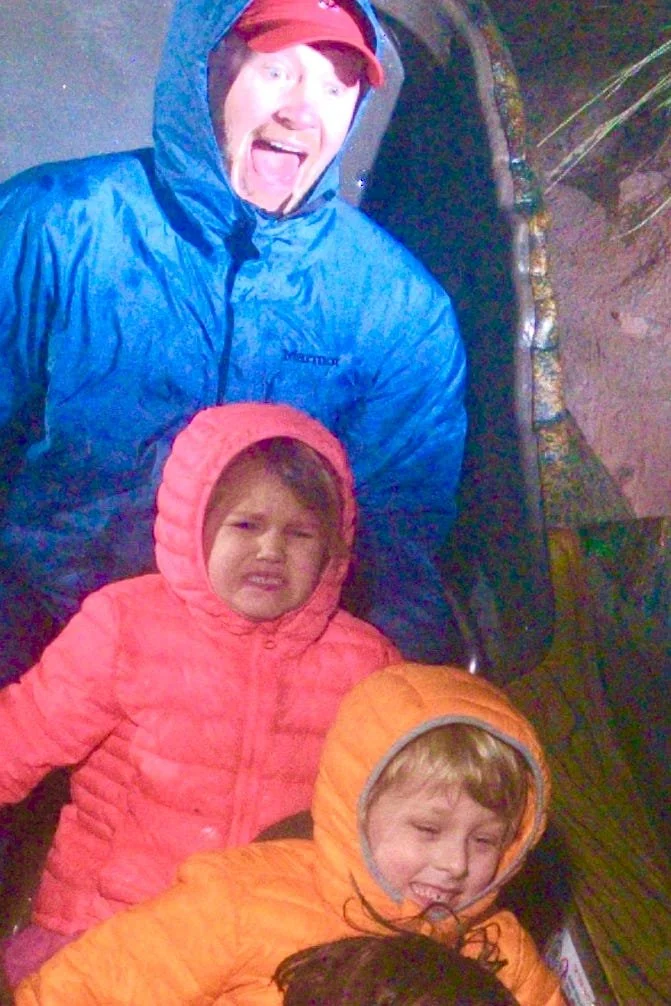
And then I had kids. I remember my 6-year-old daughter trying to cross the monkey bars, but not being strong enough to get all the way across. Every time she’d fall, I’d help her up: “That was awesome -- I bet if you try it again, you’ll get even further!” The pride I wanted her to feel lay on the other side of her failure. But I had to become the example.
A Stanford study found that kids pick up their attitude toward failure from how their parents react when it happens. So I needed to be a model of that same persistence, in a way that I never had before. I needed to reach beyond the walls of my box, no matter the consequences.
- Find Awe.
I didn’t realize how much inspiration I took from nature until I lived in Lake Tahoe. Walking outside, smelling the pine trees, feeling the dry cool air on my face…it slowed my heart rate, it lowered my blood pressure, and set my baseline stress level to “chill.”
When you find something that puts you in a state of awe, you can truly feel how insignificant your worries about what other people think, or about failing, really are. Researchers in California ran a clever study -- they asked different groups of people to draw themselves. Tourists standing in Yosemite drew themselves about a third smaller than tourists at Fisherman’s Wharf. That’s what awe does, and it’s one of the reasons I return to the mountains every chance I get.
- Look for the Lesson.
Every experience offers something for us. Even the difficult ones. I lost my dad the same day my son was born. Those were the hardest days and weeks of my life. And yet, there was something I gained that I couldn’t see at the time. I had always lived to make my father happy, to make him proud…to support him the way he supported me. Without him, I was suddenly left to answer the question I’d never asked: what would make me happy? And answering that question has changed my life. But it took years before I could see it that way.
As Epictetus put it, “It is not the things themselves that disturb men, but their judgements about these things.” What has happened to us can’t be changed. But what can change is the meaning we give to it. It isn’t always easy. But knowing it’s possible can sometimes be enough.
I think I want to modify my friend’s comment just a little. He said he had stopped fearing life. With all he’d been through, he knew he could overcome anything. But it isn’t that the fear is completely gone. It still exists, but what sits alongside it is the confidence that you can handle what comes. No matter what.
I don’t think the goal is to live without fear. As Susan Jeffers put it, the goal is to feel the fear and to do it anyway.
So the most relevant question for all of us is: Where is the fear preventing you from moving forward?
You might also like
Show all posts Do You Have a Plan, or Just a Resolution?Are You Living With Intention? Part Two: The 5 HabitsAre You Living With Intention? Part One: The 5 PillarsYou’re Not Gonna Want to Hear This...
 The problem isn't the problem: a simple way to start reframing negative thoughts
 The Year I Stopped Talking To My Mother