On this page
I began seeing a psychotherapist in my 30s.
I was living in San Francisco. We had lost two babies in miscarriages. My wife was going through a difficult cancer diagnosis - surgery and a long recovery. The family we thought we were building was put on hold indefinitely.
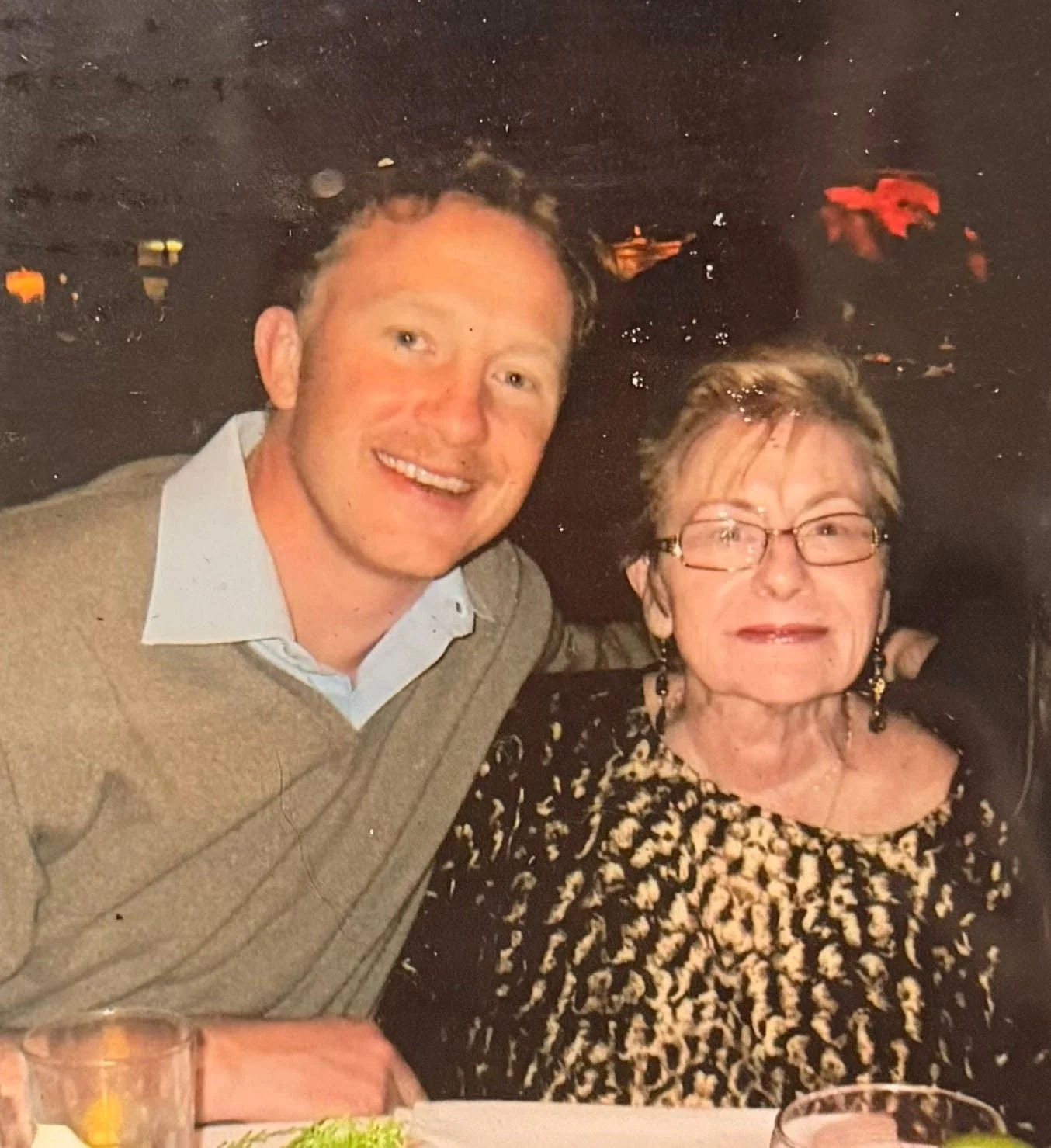
But I finally decided to talk to someone because of my mother.
My mom struggled with alcoholism my entire life. It was sad to watch, and even sadder to live with. I grew up thinking I could get her to stop -- if I could just say the perfect thing, I’d get her to see how she was hurting us. I believed, childishly, that I had the ability to change her.
So much of the person I became resulted from my relationship with my mom. I loved her dearly. But there were also times that I hated her. She could be horribly mean. She could treat me and my father like shit. And that got more and more frequent over the years, as her drinking got worse.
Over time, my mom’s behavior just became my “normal”. There were so many aspects of how she behaved -- even when sober -- that I just couldn’t see. It wasn’t until I was married that my wife helped me see it more clearly.
It started with how my mom treated my wife. In my mom’s eyes, I was her baby, and my wife was taking me from her. She never let her all the way in.
That should’ve been my first clue. But I couldn’t see it. To me, it was just mom being mom.
Hating your own mother comes with its own special baggage. The anger and bitterness and pain I carried felt like they were keeping me from a freedom that I desperately wanted. And, even into my 30s, I continued to carry the “I can get her to change” belief with me. Find the right words, and she’ll change.
Therapy finally exposed that belief. I’d been told as a kid that you can’t change anyone else, only yourself, but I was too young to believe it. My therapist asked a question I’d never considered: what would bring me peace, and what part of that was actually in my control? She was my mother. I was her only child. For my entire life, separation never felt possible.
But through the process, I saw how to draw a line: No more lying, no more deceiving, no more treating me or my wife like shit. My mother had always set the terms of our relationship, and there had never been real consequences for how she treated us. So when I began to express my boundaries, she predictably pushed back. And that was when I stopped talking to her.
It lasted about a year. I still talked to my dad, and we visited him a few times without seeing her. They were married, so that got tricky. But we made it work. And it gave my wife and me some of the best time we ever had with my dad. It makes me smile even now to remember having fried clams and Sam Adams with my dad at Legal Sea Foods. And my dad finally got to know my wife in a deeper way. He got to see what I saw in her. And the two of them built a bond that still makes my heart so happy to think about.
I stopped living on my mom’s emotional roller coaster. It wasn’t easy. But it was one of the most drama-free years of my life.
The silence gave me space, and in that space I could see how crazy things had gotten. I could see that by putting up with it, I’d been endorsing it. I’d made it normal. And acceptable.
Eventually, mom and I reconciled. She accepted my boundaries, and though I didn’t require her sobriety -- that was up to her -- I did let her know that I wouldn’t tolerate her drunkenness around me or my wife any longer. When we visited, we stayed in a hotel. If mom was drinking, we didn’t go to the house. I was able to find a way to re-integrate her into my life in a way that allowed me to love her without the constant hurt.
Looking back, that year was the first time I really claimed my own life, as a separate person from my mom. Of course, I had that power all along. But it took another fifteen years to see it.
Michael Singer has a line I love: “You don’t have to find where you’re blocked; your blockages come to you.” My mom kept showing me where I was blocked, where I still wasn’t completely free. And the year apart let me see a lot of it, but it didn’t sever the cord completely.
Even in a year without speaking, I never fully let go of her. That didn’t happen until she died. And in the days leading up to her death, I saw the pain she carried begin to release. I was fortunate to have time to say all that I wanted to say, to help give her comfort in her final days. When she was finally gone, I found I was even freer than before. And so was she.
What I understand now is that the freedom was always available. The prison I had built was in my head, forged by my thoughts about her. What kind of mother she should be. What kind of son I should be. What our relationship should look like.
I was attached to a mother who didn’t exist. And holding onto that version of her kept me stuck in the misery, the anger, and the sheer weirdness of it all that felt so normal. The year-long boundary got me partway out. But as long as she was alive, I was still hanging on to the mother I wished she could be -- the beautiful human I knew she had in her.
Now that she’s gone, I’ve been able to let go of the mother I kept waiting for, and accept the one I had: complicated, painful, sometimes beautiful. And mine.
And I still miss her.
You might also like
Show all posts