
On this page
It was 2015, and I began seeing something that terrified me.
I saw people with considerable tenure in my field -- 25-year vets -- being fired from their jobs summarily.
That was bad enough, but what it meant for them was even scarier.
Because their options were extremely limited.
There were several problems. First, it was automation: algorithms and technology were replacing a lot of the skills that these people brought to the table. Secondly, they made a lot of money. Employers knew they could replace them with someone younger and half the price, while still getting 80-90% of the productivity. But most critically, they had built a very narrow skillset. They were great at what they did, but that skill didn’t translate to many other fields.
And the real reason it scared me so much was that it hit very close to home.
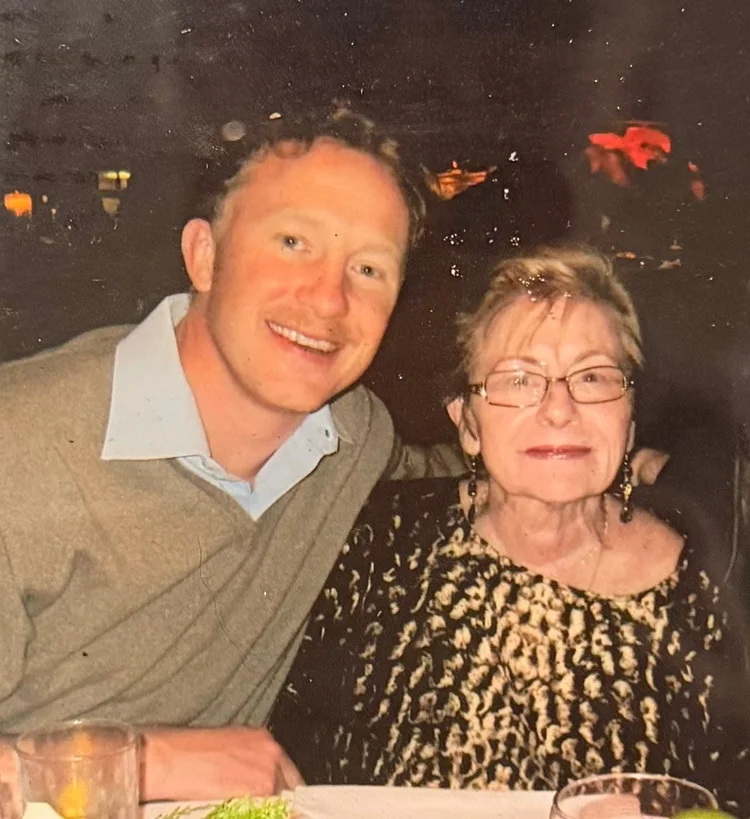
When I was 17, my father lost his job. It was 1991. He was a 49-year-old software engineer. He was middle-management, and his company had been acquired. His role was a “redundancy”.
I watched my dad struggle to figure out his next move. It took him a year, but he eventually decided on entrepreneurship. He took over a small business. But our family was never the same. I could sense that my dad felt a joy and freedom as an entrepreneur that he had never felt working in his corporate job. And yet, despite loving the lifestyle and freedom it provided, he wasn’t a salesperson. He didn’t know how to grow it. It wasn’t in his wiring.
Our family’s financial situation worsened. I could only afford college through a combination of student loans, grants, scholarships -- and working 2 jobs.
That experience taught me a lesson I would never forget: Don’t let the corporations control your destiny. They don’t owe you anything. And whenever it makes business sense for them, you’ll be gone. It won’t matter what stage of life you’re in, or what hardship your family will endure.
True freedom, as my dad found out, was the ability to hold the outcome in your very own hands.
So when I saw friends and colleagues and clients losing their jobs mid-career, with few options for what would come next, it shook me.
I knew then that I had to take control of my future. I couldn’t leave it in someone else’s hands.
Truthfully, I had been thinking about my next move since my dad passed away 3 years earlier. I’d begun doing informational interviews with people in other industries that aligned with my interests, like media and sports. But there wasn’t a real urgency to any of it. I was comfortable. I still had a job. I made a good living. There wasn’t a rush.
But when I saw the path that others were forced down, I knew that the longer I waited, the harder it would become. I was still young enough to pivot. I still had 2 decades at least to create another career path.
And in that process, I came to see the real problem that I could no longer ignore: I had spent my career building someone else’s castle. That my work, while lucrative and oftentimes fulfilling, wasn’t ultimately for me. And in that, there was risk for me and my family.
So, in 2017, I finally decided to jump.
That day is still etched into my mind. Shaking the hands, saying the goodbyes. Telling my colleagues about my complete left-turn. The shock many of them had for the risk I was taking. Some of them admired it. Some couldn’t understand it.
And there was the knowing. The knowing, somewhere deep, that I was never coming back.
I had thought about the leap for years. I knew what it would take. But mustering up the courage to do it was an entirely different animal. And that hesitation maddened me. It was fear. I knew it, and I was privately embarrassed at my inability to overcome it.
It took me 5 years. But I eventually got past the fear. Here’s what I learned once I finally did:
1. The fear doesn’t go away. The key is realizing that you don’t need it to. I kept waiting to feel ready. But ready only comes from action. The motion comes first. The ready comes after.
2. The job was more than just a job. This one was a bit sneaky. My job was a title I introduced myself with. It was story that made me feel important. It was admittance into a certain club. Leaving that is more than just a financial or career problem — it’s an identity problem. And it’s harder to get past than the money.
3. Money fear is rational. Identity fear is not — so address it head-on. You can spreadsheet your way to a financial runway. And I did. But you cannot spreadsheet your way through “who am I if I’m not that title?” That one takes a totally different approach.
4. Everyone has an opinion about your decision, and none of them actually matter. Friends, family, classmates from college or business school — they’ll all tell you what they’d do. But none of them are lying awake at 2am with the thoughts you have. Most of their life frames have to do with safety and money and climbing a clearly-defined corporate ladder: A, then B, then C. Their comfort with risk is 100% uncorrelated to what truly calls you.
5. “What if I’m not good enough” is just a future you’re deciding on before it’s even written. The belief that you’re not ready feels like truth. It’s not. It’s a decision you made a long time ago, dressed up as a fact. And you always have the power to make a different one.
6. You will grieve the certainty, even if you hated the job. Nobody tells you this. You can be miserable somewhere and still mourn leaving it — the routine, the paycheck coming every two weeks, the not-having-to-decide. There is a certain ease and comfort in that certainty. Choosing entrepreneurship means embracing uncertainty.
7. The people who matter need to believe in your plan. The conversation that scared me most wasn’t with my boss or a client. It was at my own kitchen table. My family needed an honest answer to “what happens if this doesn’t work.” What changed everything was my wife believing in the plan enough to stand next to me in the uncertainty.
8. You will feel like a beginner again. That doesn’t mean you made a mistake. Twenty years of competence, and suddenly you’re back to setting up your email system and opening bank accounts. A lot of it is decidedly un-glamorous. Make peace with that now, because that’s what building looks like from the inside.
9. The itch doesn’t go away. It waits. And every day you push off the decision it gets a tiny bit louder.
10. On the other side of the leap is not certainty. It’s just an uncertainty that’s entirely yours. I traded being controlled by a paycheck for controlling my own schedule and my own outcomes. Some days that trade still costs me. It isn’t for everyone. But I’d make it again tomorrow.
If any of this resonates for you…that feeling of no longer wanting to build a castle for someone else…I’m not telling you to definitely jump. I’m only telling you that the question isn’t going away on its own. It didn’t for me.
So maybe the question you need to stop avoiding is: How long will I let the fear make my decisions for me?
You might also like
Show all posts